A Permanent Answer to Tooth Loss
Your Missing Tooth is a Loss Worth Addressing
Losing a tooth might go unnoticed by others, but it changes a lot for you: from how you eat to how willing you are to laugh in a room full of people. Dental implants are one of the most reliable ways to address that loss, with a replacement that looks, feels, and functions like the real thing.
The Impact of Tooth Loss Builds Over Time
It's easy to put off doing something about a missing tooth. But over time, the effects go beyond the space left behind.
Without a root anchoring it in place, the jawbone beneath a missing tooth begins to shrink. The surrounding teeth can shift. Chewing becomes uneven. And the way you feel about your smile, in photos, in conversation, in everyday moments, quietly changes.
Implants are often the best choice if you want to:
- Eat without thinking about which side of your mouth to use
- Stop hiding your smile in photos or conversations
- Avoid the slipping and maintenance that comes with removable options
- Protect your remaining teeth and jawbone from further change
- Settle the issue permanently, rather than patch it temporarily
The Anatomy of a Lasting Fix
A dental implant replaces the whole tooth: root and all. Dr. Miely places a small titanium post into your jawbone, with a connector that sits above the gumline, and then, depending on your situation, either a crown or bridge becomes your newly restored, visible tooth. Once the post fuses with your bone, what you're left with is a stable fix that’s designed to last decades.
The Right Restoration for Your Situation
- Single crown: Replaces one tooth with a custom crown that blends with your surrounding smile.
- Implant-supported bridge: Spans a multi-tooth gap without involving the neighboring natural teeth.
How It All Comes Together
A real conversation first
Dr. Miely reviews your oral health, takes 3D scans using the in-office CT scanner, and walks you through whether implants are the right fit for your situation. If they aren't, he'll say so and tell you what else might work.
Placement day
The titanium post is placed under local anesthesia. If you'd like a more relaxed experience, we also offer three levels of sedation.
Healing at your own pace
The implant fuses with your jawbone over the following months. A temporary restoration keeps your smile intact throughout. The team checks in with you as you heal.
Your permanent result
Once healing is confirmed, your final crown or bridge is fitted. It's matched to the color and shape of your surrounding teeth and you should find it’s hard to distinguish from the real thing.
Are Implants The Right Step for You?
Most adults with good general health and adequate bone density are strong candidates. You're likely a good fit if you:
- Are missing one or more permanent teeth
- Have healthy gums and enough bone to support the implant
- Want a fixed solution rather than a removable one
- Are not currently pregnant or managing uncontrolled systemic conditions
If you’ve already experienced bone loss, a grafting procedure may be possible prior to implants. Dr. Miely will assess this at your consultation and give you a clear picture of what's involved.
Thorough by Nature
Dr. Miely completes 50 to 100 hours of continuing education every year, well beyond what’s required. Why? Because when a procedure requires precision and planning, those hours matter.
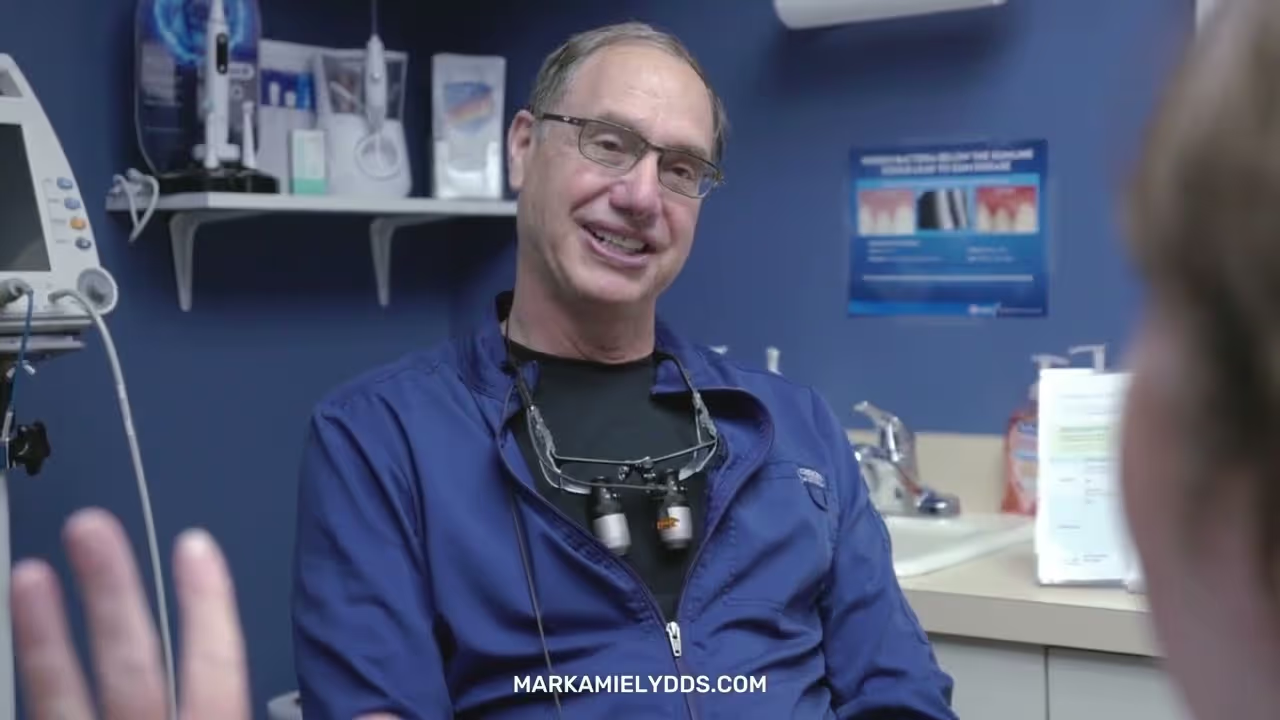
He has built this practice from the ground up and it shows in how the team operates: unhurried, thorough, and genuinely invested in the people who walk through the door. Some of our patients travel two hours to sit in his dental chair. They describe the office as an extended family, calling it the most enjoyable dental experience they've ever had.
That's not marketing. That's 30 years of dedication and showing up the same way, every time.

Stop Working Around A Missing Tooth
When you fill the space that’s been left behind by a lost tooth, you also stop working around it. You can go back to eating what you want and smiling or laughing without doubting yourself. If implants feel like the right next step, our team is here to talk it through and help you decide.

Frequently Asked Questions
How long does the full implant process take?
The timeline varies, but most patients complete the process in four to twelve months. The longest part is the healing period after placement. Dr. Miely typically provides a temporary restoration so you're never without a tooth while you wait.
Will the procedure be painful?
Placement is performed under local anesthesia, so most patients feel pressure rather than pain. Any discomfort in the days after is usually manageable with over-the-counter medication. Sedation is also available if you'd prefer a more relaxed experience.
How long do dental implants last?
The titanium post, once fused with the jawbone, is permanent. The dental crown on top is highly durable and typically lasts fifteen to twenty-five years with good oral hygiene, at which point it can be replaced without disturbing the post.
What is the difference between an implant and a bridge?
A bridge anchors to the teeth on either side of the gap, which requires some reshaping of those teeth. An implant stands on its own and leaves the surrounding teeth untouched. Both are worth discussing at your appointment.
What if I don't have enough bone for an implant?
Bone loss after extraction is quite common, especially if the tooth has been missing for some time. A bone graft can often rebuild the area before placement. Dr. Miely will assess this at your consultation and walk you through what's involved.