Are You Taking Care of Your Gums?
When we think about dental health, we often think about our teeth. It makes sense; they’re responsible for our smiles, chewing, and maintaining our jawbone and facial structure. But your mouth is complex, and your soft tissue, like your gums, faces its own unique challenges. If you’re experiencing tenderness or bleeding in your gums, you may be suffering from gum disease. Dr. Miely can help you understand and address the problem so that your entire smile stays healthy!
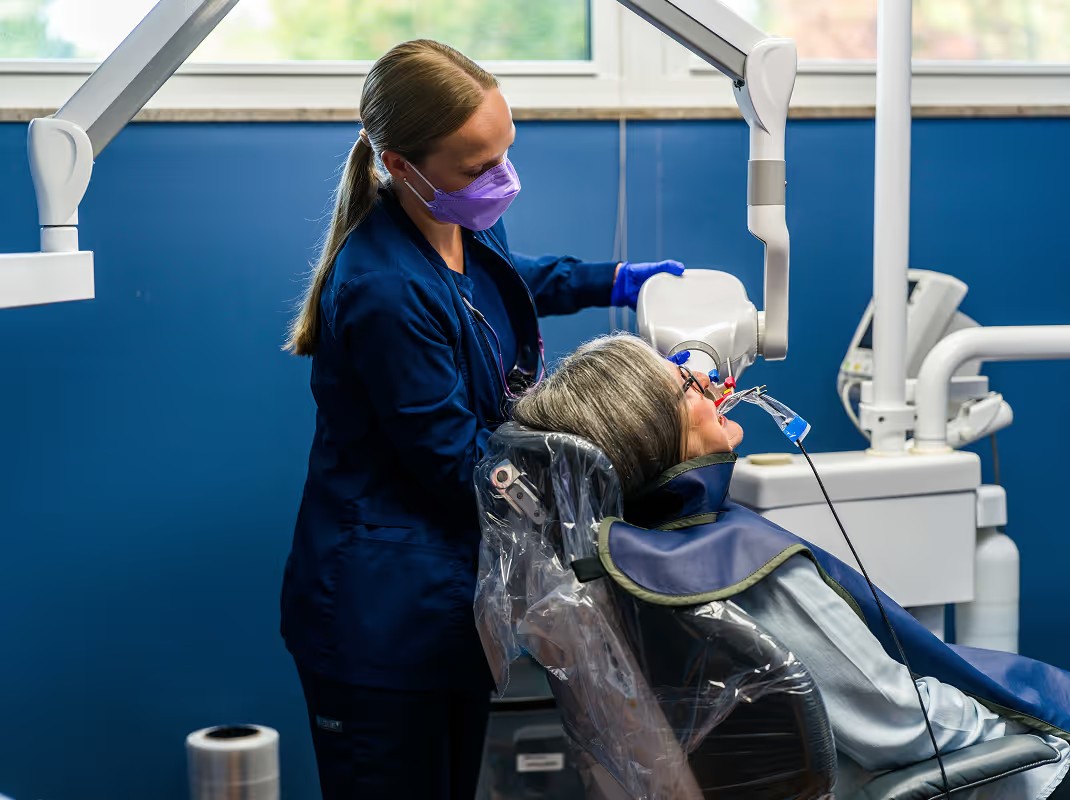
Why Periodontal Care ss Important?
Periodontal disease (gum disease) is a destructive bacterial growth that thrives in the hidden lines along your gums. Over time, it may only begin to irritate the soft tissue, but don’t be fooled! Even in its early stages, gum disease can be a serious health risk.
It causes oversensitivity in the gums before advancing into tooth decay, which can cause tooth loss and infection that can spread throughout the body. With deep care and experience in treating gum disease, Dr. Miely is here to help.
Types of Gum Disease
If you listen to commercials promising the freshest breath or the latest toothpaste, you might think that gum disease is only an inconvenience, like bad breath. Unfortunately, they’re only offering products that deal with antibacterial agents to prevent gum disease, not treat it.
If you have gum disease, it’ll be categorized into one of two types to discern how advanced your gum disease has progressed.
Stage 1: Gingivitis
The first “type” or stage is one you may have probably heard of: gingivitis. This is the first stage of gum disease and is quite treatable if caught early.
The warning signs for gingivitis can vary, but should not be ignored. Reach out if you’re noticing any of the following:
- Persistent bad breath that won’t go away
- Dark or lighter spots along your gums
- Brushing or flossing your teeth causes excessive gum bleeding
- Gums that are swollen and tender, but don’t hurt or ache on their own
- Gums are becoming overly sensitive and may even hurt when touched
Stage 2: Periodontitis
If ignored, gum disease can advance from gingivitis to periodontal disease, which has several stages. These are much more complex and can lead to tooth loss, jawbone deterioration, and even periodontitis-related infections spreading throughout your mouth.
Symptoms of periodontitis include:
- Bleeding gums, even when there doesn’t seem to be a cause
- Loose teeth or tooth loss
- Spacing between the teeth
- Persistent bad breath (halitosis)
- Gum recession, or gums pulling back from the teeth
- Discharge around the teeth and gums
- Red and puffy gums
- Tenderness in the gums or difficulty chewing
How We Treat Gum Disease
We provide effective gum disease treatments so you can protect your smile. Some of the nonsurgical options we offer include:
- Routine Teeth Cleanings: For some patients, gum disease is easily reversible with frequent routine cleanings. This process removes the tartar and plaque build-up that may be too difficult for you to eliminate at home.
- Deep Cleanings: For more advanced cases of gum disease, we offer a scaling and root planing, called deep cleaning. In this procedure, we remove the tartar and plaque from the teeth with a combination of electronic and manual scaling. We also clean your periodontal pockets to prevent the spread of gum disease.
Take Control of Your Gum Health
If you’re experiencing tender gums or suspect that you may be suffering from gum disease, get in touch with us today. We work with patients all over the Upper Arlington area to address periodontal disease as soon as possible – the earlier, the better!
What Our Patients Say



Frequently Asked Questions
My gums seem to be pulling away from my teeth. What can be done about this?
If this is happening, you may be experiencing gum recession, which can expose the sensitive roots of your teeth and make them look longer. This affects your smile's appearance and can increase sensitivity. We can help you maintain your smile and protect the roots of your teeth with thorough deep cleanings.
Is the treatment painful?
While this treatment may feel intimidating, our priority is always to make sure you feel as comfortable as possible. We perform our scaling and root planing with a local anesthetic to make sure you don't feel any pain.
Can gum disease lead to tooth loss?
Yes, untreated gum disease is a leading cause of tooth loss. As the disease progresses, it can also damage the bone and tissues that support your teeth. Our goal is to protect your smile and preserve your natural teeth as far as possible by treating gum disease early.
What happens after my gum disease treatment?
After your treatment, you'll notice a significant improvement in your gum health. We'll also send you home with more instructions on how you can care for your teeth and gums at home, and we’ll schedule follow-up appointments to ensure your smile remains healthy.